> ## Documentation Index
> Fetch the complete documentation index at: https://docs.soca.ai/llms.txt
> Use this file to discover all available pages before exploring further.
# Sub Agent
## **Overview**
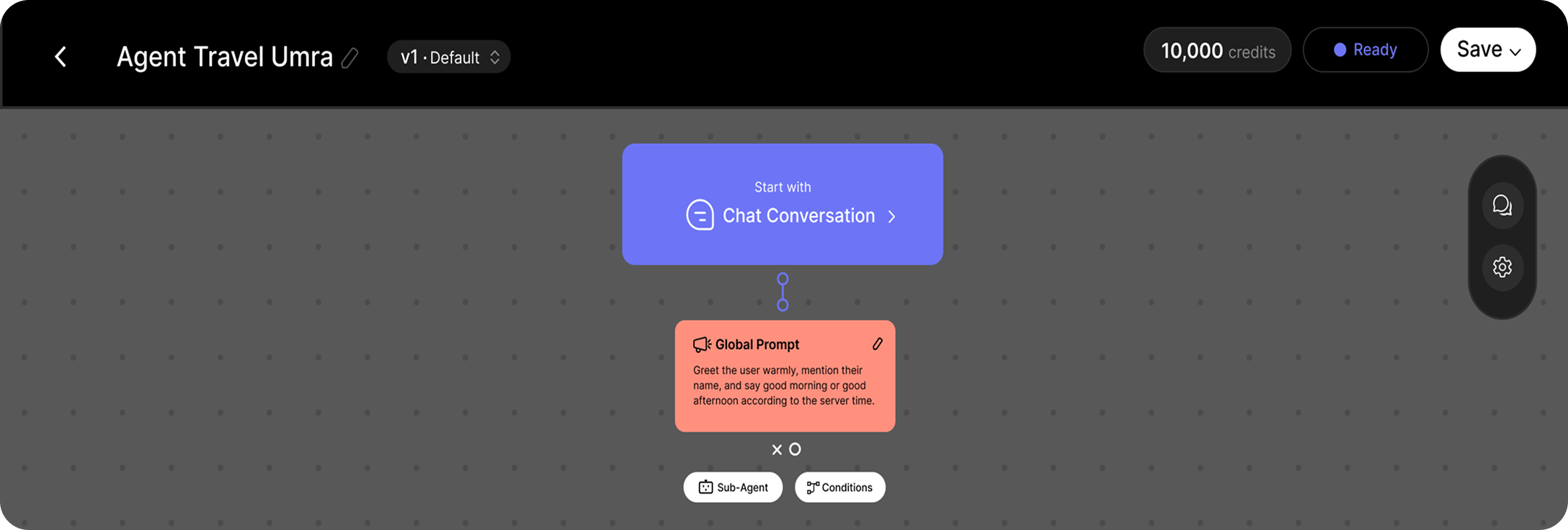 A **Sub-Agent** is a specialized AI agent designed to handle a specific type of conversation, task, or user intent within an AI workflow.
Instead of placing all business logic into a single agent, you can divide responsibilities into multiple Sub-Agents. Each Sub-Agent focuses on one particular area, making conversations more accurate, easier to manage, and simpler to maintain as your AI grows.
For example, you might create separate Sub-Agents for:
* Needs Exploration
* Product Information
* Price Inquiry
* Booking Assistant
* Employee Support
* Reimbursement
* Technical Support
* Human Handover
When a user sends a message, the AI analyzes the conversation and determines which Sub-Agent best matches the user's intent based on the configuration you provide.
# **Why Use Sub-Agents?**
Using Sub-Agents offers several advantages:
* Organize complex workflows into smaller, specialized components.
* Improve response accuracy by assigning conversations to the most appropriate agent.
* Reduce prompt complexity by separating responsibilities.
* Simplify maintenance and future updates.
* Build scalable AI workflows that are easier to extend over time.
Instead of one large prompt trying to handle every scenario, each Sub-Agent is responsible for a clearly defined purpose.
# **Configuring a Sub-Agent**
A **Sub-Agent** is a specialized AI agent designed to handle a specific type of conversation, task, or user intent within an AI workflow.
Instead of placing all business logic into a single agent, you can divide responsibilities into multiple Sub-Agents. Each Sub-Agent focuses on one particular area, making conversations more accurate, easier to manage, and simpler to maintain as your AI grows.
For example, you might create separate Sub-Agents for:
* Needs Exploration
* Product Information
* Price Inquiry
* Booking Assistant
* Employee Support
* Reimbursement
* Technical Support
* Human Handover
When a user sends a message, the AI analyzes the conversation and determines which Sub-Agent best matches the user's intent based on the configuration you provide.
# **Why Use Sub-Agents?**
Using Sub-Agents offers several advantages:
* Organize complex workflows into smaller, specialized components.
* Improve response accuracy by assigning conversations to the most appropriate agent.
* Reduce prompt complexity by separating responsibilities.
* Simplify maintenance and future updates.
* Build scalable AI workflows that are easier to extend over time.
Instead of one large prompt trying to handle every scenario, each Sub-Agent is responsible for a clearly defined purpose.
# **Configuring a Sub-Agent**
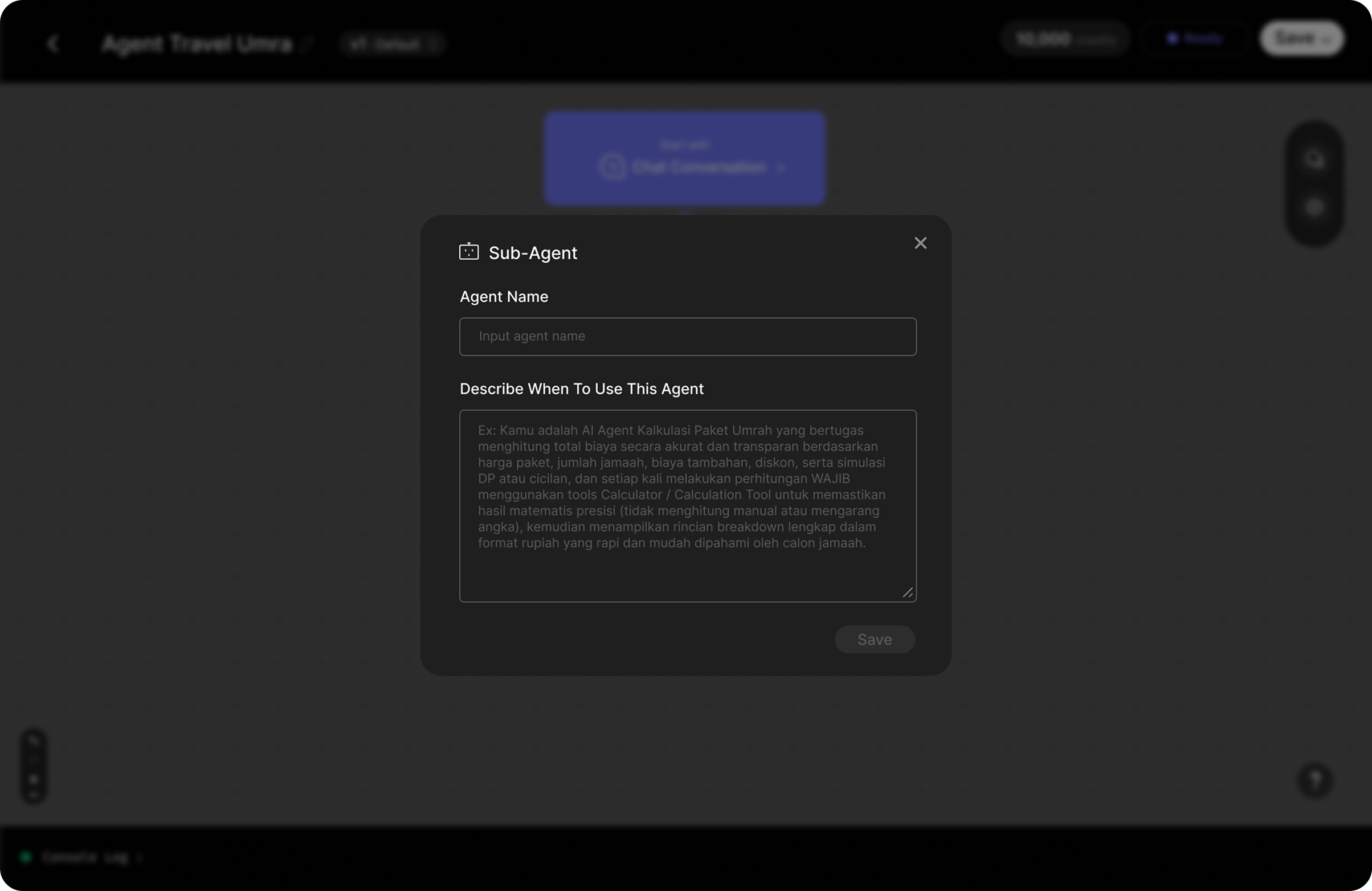 A Sub-Agent consists of two main configuration fields:
1. **Agent Name**
2. **Describe When to Use This Agent**
These fields work together to help the AI identify and route conversations to the appropriate Sub-Agent.
# **Agent Name**
## **Purpose**
The **Agent Name** is the unique name of the Sub-Agent.
It helps you identify the Sub-Agent within your project and makes your workflow easier to organize and maintain.
The name should clearly reflect the responsibility of the Sub-Agent.
## **Requirements**
* Maximum **50 characters**
* Must be unique within the project
* Use a concise and descriptive name
## **Good Examples**
* Needs Exploration
* Booking Assistant
* Product Information
* Employee Support
* Reimbursement Agent
* Technical Support
* Human Handover
* FAQ
## **Avoid**
* Agent 1
* Test
* New Agent
* My Agent
* Untitled
These names do not describe the purpose of the Sub-Agent and may cause confusion when managing multiple agents.
# **Describe When to Use This Agent**
## **Purpose**
This field tells the AI **when this Sub-Agent should be selected** during a conversation.
Rather than defining how the Sub-Agent responds, this field describes the types of conversations that belong to the Sub-Agent.
Think of it as the routing guide that helps the AI decide:
"Is this the right Sub-Agent for the current conversation?"
A well-written description significantly improves routing accuracy.
# **What Should Be Included?**
Describe the characteristics of conversations that this Sub-Agent is designed to handle.
You can include:
* User intent
* Conversation goals
* Common scenarios
* Types of requests
* Keywords or phrases
* User sentiment, when relevant
Focus on identifying **what the user is trying to accomplish**, rather than explaining how the AI should respond.
# **Example**
### **Needs Exploration**
**When to use this agent**
Use this Sub-Agent when the user is describing their situation or explaining what they need, and additional information is required before providing recommendations or taking action.
Typical situations include:
* The user is explaining a problem.
* The user is seeking recommendations.
* The user's request is still unclear.
* The AI needs to gather more information before continuing.
Common keywords:
* need
* problem
* issue
* consultation
* recommendation
* looking for
* help
* not sure
### **Booking Assistant**
**When to use this agent**
Use this Sub-Agent when the user wants to schedule, modify, or cancel an appointment.
Typical situations include:
* Booking a new appointment
* Checking available schedules
* Rescheduling an appointment
* Canceling an appointment
Common keywords:
* booking
* appointment
* available
* schedule
* tomorrow
* next week
* reschedule
* cancel
### **Human Handover**
**When to use this agent**
Use this Sub-Agent when the conversation should be transferred to a human representative.
Typical situations include:
* The user requests a human agent.
* The AI cannot resolve the issue.
* The request requires manual handling.
* The user submits a complaint.
Common keywords:
* human
* customer service
* representative
* operator
* admin
* complaint
# **Best Practices**
* Assign each Sub-Agent a single, well-defined responsibility.
* Choose a clear and descriptive name that reflects the Sub-Agent's purpose.
* Describe **when** the Sub-Agent should be used, rather than **how** it should respond.
* Include common user intents and conversation patterns.
* Add keywords that users are likely to use naturally.
* Keep descriptions focused and easy to understand.
# **Common Mistakes**
The **Describe When to Use This Agent** field should **not** contain operational instructions or response prompts.
Avoid writing:
* AI personality
* Response formatting
* Tone of voice
* Workflow instructions
* Tool usage
* Business rules
* Knowledge retrieval logic
For example, this is **not recommended**:
You are a friendly AI assistant. Always respond politely, use emojis, and provide detailed explanations.
These instructions belong in the **Conditions** or **Prompt** configuration of the Sub-Agent, not in the routing description.
# **Summary**
| **Field** | **Purpose** | **Recommended Content** |
| :---------------------------------- | :------------------------------------------------------------------ | :------------------------------------------------------------------------------------------------------------------------- |
| **Agent Name** | Identifies the Sub-Agent within the project. | A unique, concise, and descriptive name (maximum 50 characters). |
| **Describe When to Use This Agent** | Defines when the AI should route a conversation to this Sub-Agent. | User intent, conversation context, common scenarios, keywords, and sentiment that indicate this Sub-Agent is the best fit. |
| **Conditions / Prompt** | Defines how the Sub-Agent should behave after it has been selected. | Instructions, business logic, response rules, knowledge sources, tool usage, guardrails, and output formatting. |
This separation of responsibilities helps ensure that conversations are routed accurately while keeping each Sub-Agent focused, maintainable, and easy to expand as your AI workflow evolves.
A Sub-Agent consists of two main configuration fields:
1. **Agent Name**
2. **Describe When to Use This Agent**
These fields work together to help the AI identify and route conversations to the appropriate Sub-Agent.
# **Agent Name**
## **Purpose**
The **Agent Name** is the unique name of the Sub-Agent.
It helps you identify the Sub-Agent within your project and makes your workflow easier to organize and maintain.
The name should clearly reflect the responsibility of the Sub-Agent.
## **Requirements**
* Maximum **50 characters**
* Must be unique within the project
* Use a concise and descriptive name
## **Good Examples**
* Needs Exploration
* Booking Assistant
* Product Information
* Employee Support
* Reimbursement Agent
* Technical Support
* Human Handover
* FAQ
## **Avoid**
* Agent 1
* Test
* New Agent
* My Agent
* Untitled
These names do not describe the purpose of the Sub-Agent and may cause confusion when managing multiple agents.
# **Describe When to Use This Agent**
## **Purpose**
This field tells the AI **when this Sub-Agent should be selected** during a conversation.
Rather than defining how the Sub-Agent responds, this field describes the types of conversations that belong to the Sub-Agent.
Think of it as the routing guide that helps the AI decide:
"Is this the right Sub-Agent for the current conversation?"
A well-written description significantly improves routing accuracy.
# **What Should Be Included?**
Describe the characteristics of conversations that this Sub-Agent is designed to handle.
You can include:
* User intent
* Conversation goals
* Common scenarios
* Types of requests
* Keywords or phrases
* User sentiment, when relevant
Focus on identifying **what the user is trying to accomplish**, rather than explaining how the AI should respond.
# **Example**
### **Needs Exploration**
**When to use this agent**
Use this Sub-Agent when the user is describing their situation or explaining what they need, and additional information is required before providing recommendations or taking action.
Typical situations include:
* The user is explaining a problem.
* The user is seeking recommendations.
* The user's request is still unclear.
* The AI needs to gather more information before continuing.
Common keywords:
* need
* problem
* issue
* consultation
* recommendation
* looking for
* help
* not sure
### **Booking Assistant**
**When to use this agent**
Use this Sub-Agent when the user wants to schedule, modify, or cancel an appointment.
Typical situations include:
* Booking a new appointment
* Checking available schedules
* Rescheduling an appointment
* Canceling an appointment
Common keywords:
* booking
* appointment
* available
* schedule
* tomorrow
* next week
* reschedule
* cancel
### **Human Handover**
**When to use this agent**
Use this Sub-Agent when the conversation should be transferred to a human representative.
Typical situations include:
* The user requests a human agent.
* The AI cannot resolve the issue.
* The request requires manual handling.
* The user submits a complaint.
Common keywords:
* human
* customer service
* representative
* operator
* admin
* complaint
# **Best Practices**
* Assign each Sub-Agent a single, well-defined responsibility.
* Choose a clear and descriptive name that reflects the Sub-Agent's purpose.
* Describe **when** the Sub-Agent should be used, rather than **how** it should respond.
* Include common user intents and conversation patterns.
* Add keywords that users are likely to use naturally.
* Keep descriptions focused and easy to understand.
# **Common Mistakes**
The **Describe When to Use This Agent** field should **not** contain operational instructions or response prompts.
Avoid writing:
* AI personality
* Response formatting
* Tone of voice
* Workflow instructions
* Tool usage
* Business rules
* Knowledge retrieval logic
For example, this is **not recommended**:
You are a friendly AI assistant. Always respond politely, use emojis, and provide detailed explanations.
These instructions belong in the **Conditions** or **Prompt** configuration of the Sub-Agent, not in the routing description.
# **Summary**
| **Field** | **Purpose** | **Recommended Content** |
| :---------------------------------- | :------------------------------------------------------------------ | :------------------------------------------------------------------------------------------------------------------------- |
| **Agent Name** | Identifies the Sub-Agent within the project. | A unique, concise, and descriptive name (maximum 50 characters). |
| **Describe When to Use This Agent** | Defines when the AI should route a conversation to this Sub-Agent. | User intent, conversation context, common scenarios, keywords, and sentiment that indicate this Sub-Agent is the best fit. |
| **Conditions / Prompt** | Defines how the Sub-Agent should behave after it has been selected. | Instructions, business logic, response rules, knowledge sources, tool usage, guardrails, and output formatting. |
This separation of responsibilities helps ensure that conversations are routed accurately while keeping each Sub-Agent focused, maintainable, and easy to expand as your AI workflow evolves.